
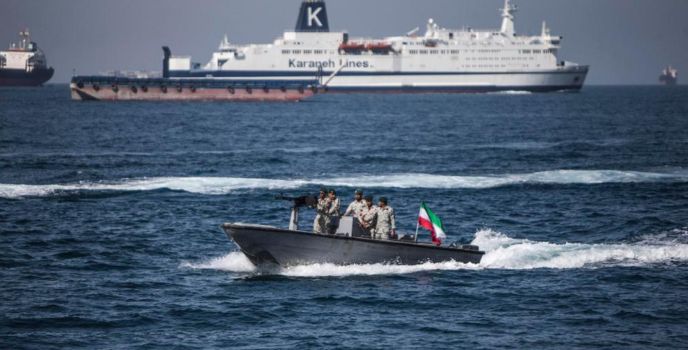
For over a month, following coordinated U.S.-Israel strikes on Iran, Tehran has imposed intermittent restrictions on maritime traffic through the Strait of Hormuz in response to these attacks, disrupting the global energy market. Accounting for nearly a fifth of global oil and Liquefied Natural Gas (LNG) flows, even limited constraints on the strait have been enough to unsettle markets, push up prices, and strain supply chains worldwide. The episode has exposed the fragility of global energy flows and, more importantly, has begun to reshape regional perceptions of reliability.
For smaller South Asian countries, the implications are severe and immediate. These economies depend heavily on Gulf-based hydrocarbon imports and have limited buffers to absorb shocks. In such conditions, the value of a regional power is defined by its ability to respond quickly and reliably to a crisis. Despite deep economic and infrastructure ties with China, South Asian states have preferred to turn to India when the crisis unfolds. That choice is not incidental. It reflects a consistent pattern across crises, where India emerges as the preferred partner and first responder, a perception that could be leveraged for long-term strategic influence.
Crisis as a Stress Test of Partnerships
Over the past decade, both India and China have significantly expanded their energy footprints across South Asia, but in different ways. China’s approach has been anchored in large-scale infrastructure development under the Belt and Road Initiative (BRI), with investments in ports, pipelines, and refining capacity aimed at strengthening connectivity. For instance, last year, Sri Lanka received 3.7 USD Billion from China as foreign direct investment for an oil refinery with a 200,000-barrel capacity at southern Hambantota. On the other hand, India has operated a less financially-intensive, but functional approach. Leveraging its geographical proximity to Bangladesh, New Delhi has built a cross-border energy pipeline with Dhaka, transporting diesel from the Numaligarh refinery in Assam to Parbatipur in Bangladesh since 2023. With Nepal, India has a B2B agreement between the Indian Oil Corporation and the Nepal Oil Corporation since 2024 to enhance petroleum infrastructure, integrating its energy system with neighbouring economies. It has enabled faster mobilisation of supply, making its energy partnerships more immediately actionable under stress conditions.
Moreover, recent developments show how these models perform in actual crisis situations, like the energy constraint caused by the blockade of the Strait of Hormuz. Even though Beijing is the world’s leading oil refiner by capacity and had fuel reserves of three months when the disruption of the Strait began, it is noteworthy that South Asian states formally reached out to New Delhi for fuel assistance rather than to Beijing. Sri Lanka, after receiving urgent fuel assistance from India in March, sought additional support from China only in early April. Although Beijing subsequently offered assurances, the scale and modalities of its assistance remain unclear. A similar dynamic is visible with the Maldives. Despite the Maldives’ pro-China alignment during the initial phase of President Mohamed Muizzu’s tenure, Malé did not approach Beijing for fuel assistance and instead turned to India to meet its immediate needs. Taken together, these cases show a clear pattern of smaller South Asian states prioritising responsiveness over depth of economic or political ties in times of acute stress.
India, despite facing significant energy supply disruptions, has positioned itself as a regional first-responder. It has stepped in to supply crude oil, Liquefied Petroleum Gas (LPG), LNG, petrol and diesel to its neighbours during a period of acute supply scarcity, thus positioning itself as a stabilising force in the region. Since March, India has supplied 38,000 metric tons of petroleum to Sri Lanka following Colombo's request, delivered 22,000 metric tons of diesel to Bangladesh via the Friendship Pipeline and is currently examining additional supply requests from Nepal and the Maldives. This approach - often described as “energy diplomacy” - is not merely reactive. It reflects a strategic choice to deploy energy capacity as an instrument of regional statecraft.
Reliability as Long-Term Strategic Capital
Recent political developments across South Asia are often seen as signs of India losing ground. However, these interpretations place too much weight on political signalling. Sri Lanka’s growing reliance on Chinese financing following its economic crisis, the new government under President Mohamed Muizzu and the “India Out” campaign in the Maldives, the fall of Sheikh Hasina’s regime in Dhaka and periodic tensions with Nepal before the Gen Z revolution are presented as evidence of a regional shift away from New Delhi’s influence. However, governments in South Asia often recalibrate their ties with India for domestic political reasons and expand engagement with China to secure specific economic interests. Nonetheless, the latest energy crises reveal a hierarchy of regional dependence.
South Asian states prioritise partners who can deliver immediately in times of economic and political uncertainty. Despite expanding economic ties with China, they continue to turn to India for vital supplies like diesel, LPG and crude oil. This is not only about proximity but rather reflects a level of trust built through repeated experience. China, in response to the crisis, chose to restrict exports of refined fuels such as gasoline and diesel to protect its domestic market. India, facing similar constraints, took a different approach to ensure continuity in supply and signalled that commitments will be upheld. Countries like Nepal and Bhutan, landlocked and heavily dependent on India for fuel and LPG, have continued to receive previously agreed upon supplies without disruption. Over time, such actions reinforce the perception of India as a dependable and reliable partner in moments of crisis.
However, this does not mean South Asia will shift its engagement entirely away from China moving forward. South Asian states will continue to rely on China for investment, infrastructure, and financing. It remains relevant to their development trajectories and is likely to retain its position as a leading extra-regional economic partner. This reflects a broader pattern of strategic autonomy in South Asia, where states engage different partners based on specific needs rather than pursuing exclusive alignment. For India, the ability to deliver under stress carries cumulative value. By responding proactively during crises, New Delhi is building credibility that extends beyond immediate relief. Therefore, India’s advantage lies not in matching China’s scale but in sustaining reliability - a form of strategic capital that builds gradually and shapes regional alignments over the long term.
Way Forward
With little indication of a near-term rapprochement between Washington and Tehran, there is a high possibility that disruptions to maritime traffic through the Strait of Hormuz are likely to persist. For South Asian economies already operating with limited buffers, a prolonged disruption could translate into sustained price pressures and mounting fiscal strain. Even if the flow stabilises temporarily, the broader geopolitical implications of the crisis are likely to endure for the medium to long-term. Under such conditions, sustainable external dependence becomes more entrenched and smaller states will continue to rely on regional powers for support or survival during periods of acute stress.
At the same time, a prolonged crisis will introduce distinct challenges for both India and China. For India, sustained disruptions will increase domestic pressure on fuel availability, potentially constraining its ability to maintain external supply commitments. Its position as a regional stabiliser will therefore depend on how effectively it counters internal demand with external obligations. For China, the challenge lies in countering India’s long-term image as the region’s first responder will require a shift from long-term investment to timely delivery. In this context, how India and China, the two regional powers, choose to respond, whether by extending sustained assistance, scaling up engagement, or retreating inward, will determine longer-term alignments. In that sense, the Strait of Hormuz crisis is doing more than testing resilience; it is reshaping the benchmarks of regional leadership in South Asia.
Author
Ophelia Yumlembam
Ophelia Yumlembam is a Research Associate at the Organisation for Research on China and Asia (ORCA). Before joining ORCA, she worked at the Dept. Of Political Science, University of Delhi, and interned at the Council for Strategic and Defence Research in New Delhi. She graduated with an M.A. in Political Science from the DU in 2023. Ophelia focuses on security and strategic-related developments in Myanmar, India's Act East Policy, India-Myanmar relations, and drugs and arms trafficking in India’s North Eastern Region. Her writings have been featured in the Diplomat, South Asian Voices (Stimson Centre), 9dashline, Observer Research Foundation, among other platforms.