
Water plays a critical role in shaping the dynamics of international relations. Shared river systems can facilitate economic interdependence, cultural exchange, and cross-border societal linkages; however, they can also become instruments of economic deterrence and environmental threat for the downstream country. The governance of transboundary water resources has become increasingly contentious with the rise in population, mounting freshwater scarcity, and advances in states’ technological capacity to regulate and control river systems. Most of the river disputes reflect broader geopolitical asymmetries, particularly where upper riparian states use rivers as convenient tools to pressurize lower-riparian states. In this sense, transboundary water disputes are a prisoner’s dilemma fundamentally rooted in geopolitics.
Although the Teesta River dispute has not attracted the same level of attention as disputes over the Brahmaputra River, Nile River, or Tigris River, its long-term implications for India–Bangladesh relations and the strategic landscape of Northeast India remain significant. It was evident recently when the interim government of Bangladesh considered involving China in the matter. While such engagement may appear developmental in nature, Chinese presence in the Teesta Basin could potentially transform a technical bilateral dispute into a broader security concern for India primarily due to the proximity of the river basin to the Siliguri Corridor and poorly connected Northeast India.
The Genesis and Contemporary Resurgence of Teesta Dispute
The management and allocation of Transboundary rivers have remained persistent sources of contention in South Asia since the partition. While many of these disputes originated from territorial and political reconfigurations, the Teesta issue evolved from a historical water-sharing concern into a recurring challenge in India–Bangladesh relations. Initially raised during the pre-independence period and later carried into the post-1971 era following the creation of Bangladesh, the dispute has become a major bone of bilateral contention. Over time, however, the Teesta question has moved beyond its conventional hydro-political dimensions and increasingly intersected with broader strategic and geopolitical considerations. This shift has become more visible in recent years when China committed itself to the $1 billion Teesta River Comprehensive Management and Restoration Project (TRCMRP) last year, for which a feasibility study had been conducted in 2019. Although framed as a river management and development initiative, the project generated concerns in India due to the possibility of deeper Chinese engagement in the region. In response, India reportedly sought to offer alternative developmental assistance, creating a complex diplomatic dilemma with the then Awami League government. Alongside strategic considerations, concerns relating to India’s reservations and the apprehension of adverse environmental consequences impeded the progress of the project.
But, the fall of the Hasina government in 2024 have subsequently revived discussions around the project. The post-2024 political transition and the emergence of a new political leadership in Dhaka have reshaped Bangladesh’s foreign policy calculations, with increasing emphasis on a pragmatic and balanced approach to maintain equilibrium between India and China and for that matter with any other country that aligns well with Tarique Rahman’s ‘Bangladesh First’ policy. Under the circumstances, the Teesta trajectory warrants serious scrutiny, particularly from India’s perspective. From India’s perspective, the concern extends beyond water management because the proposed project zone outlined in TRCMRP is far too close to the Siliguri Corridor, which connects India’s Northeast to the mainland. Consequently, expanded Chinese involvement in the Teesta Basin is apprehended to breed internal unrest, create security risk and intensify geopolitical competition in an already sensitive region.
The Present Scenario
Although the Teesta issue has temporarily receded from the center of regional discourse due to Bangladesh’s domestic political transition and wider West Asia crisis, it did not obliterate altogether. Rather than disappearing, the issue has entered a phase of strategic recalibration. The close political understanding that characterized India’s engagement with the previous Sheikh Hasina government has weakened following the political transition in Dhaka. Although India made a warm outreach to the newly elected Bangladesh Nationalist Party (BNP) government, longstanding historical mistrust and the residual tensions of recent years continue to shape bilateral perceptions. In such a scenario, it is very unlikely that the BNP government would easily withdraw the Teesta deal with China without a substantial alternative from India. For Bangladesh, the Teesta question extends beyond water-sharing and carries important developmental and political significance. As one of the country's major transboundary rivers, the Teesta sustains the livelihood of nearly 9 million people in northern Bangladesh and has become deeply embedded in domestic political discourse after decades of unresolved negotiations. Consequently, any government in Dhaka must balance domestic expectations with external strategic considerations.
Simultaneously, Bangladesh’s relationship with China has expanded considerably over the past decade through trade, infrastructure financing and broader economic cooperation. China has been the largest trading partner for the last fifteen years and a key supplier of military hardware. Bangladesh joined the BRI in 2016 and China disbursed $ 2.97 billion to Bangladesh in the last four years only. China allocated $3.3 billion for the 170-kilometer Padma Bridge from Dhaka to Jessore, about $1.95 billion for the Karnafuli tunnel and about $1.9 billion for the Payra Power Plant and also working on Mongla Port. China’s involvement in major connectivity and development projects under the framework of bilateral cooperation has strengthened its position as an important economic partner, and this engagement has generally enjoyed support across Bangladesh’s political spectrum. Most importantly, Bangladesh’s relations with China enjoys cross-party consensus, as reiterated by the interim regime’s foreign affairs advisor Touhid Hossain, something that India doesn’t enjoy despite its crucial role in Bangladesh’s liberation war. Within a week of Tarique Rahman assuming office as the new Prime Minister, China made warm outreach, signaling its willingness to advance the Teesta project. A few days later, foreign minister of Bangladesh, Khallilur Rahman, met the Chinese ambassador Yao Wen and indicated that the project would commence soon. In further sign of deepening engagement, a 19-member delegation led by BNP’s General Secretary Mirza Fakrul Islam Alamgir was dispatched to China last month. As per report, during the high-level meeting, Alamgir underscored China’s importance in resolving the Teesta and the Rohingya issues. This shows that ‘Teesta’ still figures prominently in China-Bangladesh engagement. In this visit, Alamgir also expressed Tarique Rahman’s will to strengthen comprehensive strategic partnership with China.
When Bangladesh’s outreach to China appears more strategic, and economically driven, its engagement with India remains rather cautious and politically calibrated influenced by domestic politics, water issues, border conflict and historical perceptions. Under the present situation, it does not seem quite easy for New Delhi to counter China’s involvement immediately. India, therefore, needs a more nuanced diplomatic approach in order to rebuild trust with the new government in Bangladesh, and to understand India’s red lines. The Teesta is, after all, an Indian river that traverses to Bangladesh and despite being an upper riparian state India remained sensitive to Bangladesh’s concerns all through. The silver lining is that India is trying to maintain Bangladesh as a reliable and long-term ally. This is evident in India’s prompt initiative to supply Bangladesh diesel due to the ongoing West Asia crisis reiterating its commitment to ‘first responder’ approach. Bangladesh’s foreign minister acknowledged this goodwill gesture with gratitude during his visit to New Delhi last month. His outreach to India was warm and India reciprocated in equal measure, candidly expressing its security concerns among many other issues discussed. Such interactions may provide opportunities for restoring strategic confidence between the two countries and creating a more conducive environment for dialogue on sensitive issues.
The broader challenge for India is no longer limited to resolving a water-sharing dispute. The Teesta issue has increasingly become intertwined with questions of regional influence, connectivity and security. Renewed interest in external involvement in the Teesta Basin underscores the urgency of finding a durable political solution. India, therefore, must act urgently. Reviving previous frameworks of understanding or adapting earlier proposals like the 2011 to current realities could offer potential pathways forward. The present political leadership in West Bengal may now be more conducive to helping the Centre build a broader consensus on the matter. Given Tarique Raham’s recent overtures to Beijing and the latter’s readiness to engage, India can no longer afford to delay finding a durable solution, either by considering the 2011 formula or by reviewing its 2024 TRCMRP blueprint. A decisive settlement of the Teesta dispute would also reaffirm India’s commitment to its ‘Neighborhood First Policy’, while reducing strategic risks to the Siliguri Corridor, the main artery of security for Northeast India.
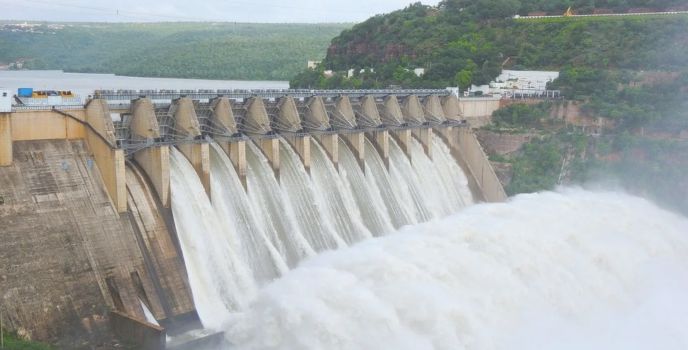
Image Credit: EastMojo

Author
Joyati Bhattacharya
Joyati Bhattacharya is Professor in the Department of Political Science at Assam University, Silchar, Assam. Her areas of specialization include India’s Foreign Policy and Northeast India. She can be reached at [email protected]