
China’s boldest experiment in reform since 1978 and the world’s largest Free Trade Port (FTP) on the island of Hainan is poised to usher in a new stage of liberalisation and opening up policies. The island-wide customs closure on 18th December 2025 marks the second phase of Hainan FTP’s ambitious project to become a model for freer flow of capital, goods and people in China. Since the Party’s decision in 2018 to construct a pilot free trade zone (PFTZ) on the entire island, Hainan has been positioned as a “gateway” for reform and opening up. China’s new engine for economic globalization is supported by trade liberalization initiatives, preferential tax regimes, relaxed visa and residency rules and other measures to deepen China’s integration with the global economy.
During his latest inspection visit to Hainan in early November 2025, Xi Jinping emphasized high-standards for building the Hainan FTP, reflecting the international status envisioned for the province. The General Secretary’s remarks assume greater significance as an island-wide customs regime goes into effect on December 18th, marking the second phase of the Hainan FTP project. Besides trade liberalization, the province has been designated a national pilot zone for ecological conservation, an international tourism and consumption destination and a service zone for major national strategies. The outcomes are expected to enable the high-quality development of one of China’s underdeveloped provinces and usher a new development paradigm nationwide. Will the Hainan FTP experiment pay off or will the weight of expectations and challenges cripple China’s ambitious initiative?
Strategic Direction
Special Economic Zones (SEZs) have remained at the heart of China’s development trajectory and transformation. According to Fan Gang, SEZs facilitate rapid integration with international markets, improve the efficiency of resource utilization, boost foreign trade, facilitate knowledge exchange and create new solutions/models for nation-wide policy problems. Since their creation in 1980, China’s SEZs have been testing grounds for market-oriented policies and institutions. Hainan, designated as China’s 5th SEZ in 1988, has also experimented with economic liberalization, albeit with less success compared to SEZs like Shenzhen or Zhuhai. For instance, Hainan was the first province in China to introduce a visa-on-arrival policy in 2000, the first to implement relaxed air transport operating rights in 2003 and in 2011 implemented a pilot tax-free shopping program for tourists. The strategic advantage of SEZs and their relevance to Hainan’s FTP development was detailed by Xi Jinping in his speech at the 30th anniversary of the SEZ in Hainan.
Today, Hainan’s strategic direction leverages its unique FTP status to “become a new benchmark for comprehensively deepening reform and opening up in the new era”, according to the Party Central Committee. Besides setting a new standard for reform of China’s domestic economic policies, the Hainan FTP is expected to “build a forward position for China's deep integration into the global economic system”. The strategic initiative granted to Hainan, domestically and internationally, shares several similarities with China’s reform and opening up of the late 1970’s, indicating a historic mandate; drawing from international experience, leveraging unique geostrategic advantages, operating with greater autonomy and retaining Chinese characteristics in the pursuit of modernization.
The strategic direction of Hainan FTP is also determined by an interest in cultivating a world-class FTP like Singapore, Dubai and Hong Kong. According to Lin Nianxiu, vice-minister of the National Development and Reform Commission (NDRC), “Hainan needs to learn from the advanced experience of internationally renowned free trade ports such as Hong Kong, Singapore and Dubai”. While official sources argue that Hainan would complement nearby Hong Kong’s strengths, others like Chen Bo of Huazhong University of Science and Technology and financial analyst Liu Xiaobo suggest Hainan would compete with Hong Kong in many key aspects of trade and tourism flows. It is also likely that Hainan and Hong Kong cooperate to exchange finance, talent and resources, a complementary relationship rather than the competitive one envisioned by some.
Hainan is also positioned as a gateway for China’s major national strategies, like the Belt and Road Initiative (BRI), becoming a maritime power, deepening trade connectivity with Southeast Asia and expanding maritime presence in the South China Sea (SCS). Located at the centre of the Regional Comprehensive Economic Partnership (RCEP) region, Hainan is keen to develop more dense near-sea international trade routes covering South and Southeast Asia, according to Huang Peng, deputy director of the Department of Transport of Hainan Province. Leveraging its position as a hub on the Maritime Silk Road, Hainan with 72 container shipping routes, is also broadening its connectivity with ports in the Beibu Gulf and Guangdong-Hong Kong-Macao Greater Bay Area. Maritime connectivity with ASEAN is accompanied by considerations of resource and territorial control in the South China Sea. Plans for the Hainan FTP call on Hainan’s enterprises and administrations to participate in the development of resources in the SCS that enhance comprehensive control and development capabilities over jurisdictional waters. Some see the FTPs positioning as rendering disputes in SCS less important to disputing states, than pursuing economic cooperation with China.
Policy Design and Timeline
The policy framework for Hainan FTP follows a top-down design, with a relatively high degree of economic autonomy exercised by provincial and local administrations. The Hainan FTP was ideated and guided by the Party core and central government, with provincial authorities charged with implementation and “crossing the river by feeling the stones”. Xi Jinping has been credited with providing the policy direction for Hainan’s FTP development, providing instructions, key measures and personally coordinating the trajectory of the initiative. State media and provincial leaders have boldly credited him for the Hainan FTP, tracing the genesis of the idea back to Xi’s 1979 Hainan visit, interest in FTPs and implementation of opening-up policies in Xiamen. At the 30th anniversary of the Hainan SEZ, Xi Jinping declared the “construction of a free trade port with Chinese characteristics”, which “represents the highest level of openness in the world today”.
Central Party and State institutions like the Central Committee and State Council have issued guiding policy documents, providing the overall direction for Haian’s FTP development. The Guiding Opinions of the CPC Central Committee and the State Council on Supporting Hainan's Comprehensive Deepening of Reform and Opening Up issued in April 2018 and Overall Plan for the Construction of Hainan Free Trade Port issued in June 2020 are the policy backbone of Haian’s FTP. The legal foundation for Hainan FTP is laid out in the Hainan Free Trade Port Law of the People's Republic of China, authorizing central and provincial administrations to pursue economic liberalization and opening-up policies in line with central Party directives and local conditions. The Hainan provincial government and its departments have subsequently announced policy initiatives focusing on trade, taxation, visa rules, market access, investment and rule of law.
The timeline for implementation of policies follows three stages. The first phase of the Hainan FTP was from 2020-2024, and involved policy and institutional measures to establish an operational Free Trade Zone (FTZ), focusing on trade and investment liberalization, creating a business environment of first-class level domestically, legal and ecological frameworks and closed customs system. The second phase from 2025-2034 is the implementation period, deepening the opening-up of the FTP through further relaxation of regulations relating to the flow of people, capital, data and goods, along with greater optimization of the business, regulatory and social environment. Phase 3 of the FTP from 2035-2050 is the maturation period for the Hainan FTP, characterized by a world-class business environment, high-level FTP with strong international influence and advanced socialist modernization of Hainan. The phased and calibrated pace of developing the Hainan FTP suggest a sustained commitment to furthering economic globalization, acknowledgement of local requirements and external factors, and interest in consolidating China’s advantages in exports and manufacturing.
Liberalization and Opening Up Policies
Trade and Services
Hainan FTP’s trade liberalization policy is defined by an independent customs system that enables a “zero-tariffs” policy for trade in goods. The entire island of Hainan is treated as an independent customs territory, separate from the Chinese mainland, operating under a “first-line” and “second-line” customs system. Following the official launch of the island-wide customs system on December 18th 2025, Hainan will implement a model of "freer access at the first line, regulated access at the second line, and free flow within the island." The first-line is between Hainan and overseas, and goods imported into Hainan from overseas, by “eligible entities”, that fall outside the catalogue of taxable import goods (negative list) are exempt from import duties, value-added tax and consumption tax (zero tariff). The second-line is between Hainan and the mainland, and goods imported into the mainland that have been produced by “encouraged” industries within Hainan FTP, containing imported materials, and have undergone processions and value-added exceeding 30% within the FTP are exempt from import duties when entering the mainland. For domestic sales within Hainan between eligible entities, no customs duties are applied but value added tax (VAT) and consumption taxes are eligible, and for non-eligible entities taxes are charged on the imported portion. Moreover, supporting the objective of liberalizing the transportation sector, “zero tariffs” apply to imported vehicles, ships, aircraft and yachts for transportation and tourism. Following the customs regime on December 18th, the proportion of zero-tariff products will increase from 21 per cent to 74 per cent, covering 6,600 product categories.
The liberalisation policy for trade in services is regulated by a negative list, and includes a “letting firms in and letting them do business” approach. The policy includes China’s first national negative list for trade in services, demonstration zones for service trade innovation, simplification of licensing, standards and approval procedures, easier entry/exit of managers and technical personnel, and removal of market access barriers in sectors like tourism, transportation, finance, business services, healthcare, education, and culture/entertainment. It covers 67 measures, and Hainan FTP has also decided to permit foreign private enterprises to operate in sectors like telecommunications, hospitals, finance and transportation. According to Ye Xin, Director of the Digital Trade Institute of the Ministry of Commerce Research Institute, the pilot program for Trade in services initiated in Hainan in 2021 has been extended to China’s other FTZs, reflecting Hainan’s purpose as a testing ground for national strategies.
Taxation
Hainan’s taxation policy is critical for its development as a globally competitive FTP, and ability to attract professional talent. Between 2020 to 2024, a preferential individual income tax (IIT) policy applied to high-end and scarce talents and individuals whose income reached RMB 300,000 or more in a year. The scope of preferential measures applied to technical and management personnel in tourism, modern services and high-tech industry, as well as high-efficiency seed industry, telecommunications, shipping and others. The IIT policy was amended in 2025 and until 2027, Hainan FTP will apply a preferential IIT rate of 15% on any individual with actual residence in Hainan for at least 90 days per year, far lower than the mainland rate of 45%. Overall, Hainan will have three individual tax brackets of 3% (income below RMB 30,000), 10% and 15%.
A Corporate Income Tax (CIT) rate of 15% is applicable for enterprises in encouraged industries registered and substantially operating in Hainan FTP. Moreover, enterprises engaged in tourism, modern services and high-tech industries are eligible for exemptions for income from newly increases overseas investment before December 2027. The preferential CIT policy applies to eligible enterprises who generate more than 60% of the total revenue from operations based in Hainan FTP and demonstrate that enterprise leadership is based in Hainan. Compared to China’s national statutory corporate tax rate of 25%, Hainan has a lower tax burden on enterprises by 10%. Although Hainan’s CIT is lower than Hong Kong (16.5%) and Singapore (17%), it does not apply to all companies like CIT in Hong Kong and Singapore.
Tax policy also includes simplifications made to value-added tax, consumption tax, vehicle purchase tax, urban maintenance and construction tax, and education surcharge. For instance, passengers leaving Hainan are exempt from customs duties, import VAT and consumption tax, depending on value, type and quantity of purchase at duty-free shops. The number of duty-free goods has been frequently revised with the latest expansion covering 47 categories. Hainan FTP’s tax policies are crucial for the objective of competing with international FTPs, becoming an international tourism destination, and to support China’s broader economic policy focus on boosting consumption. Lu Xuhong, Vice President and Professor of the Beijing National Accounting Institute, argues that adjustment of tax policy is conducive to attracting more domestic and foreign consumers, boosting tourism and consumption.
Talent and Entry/Exit of People
Attracting and cultivating talents is a major objective and measure of Hainan FTPs opening up policies. This has been undertaken by relaxing entry/exit (visa) restrictions, residency procedures and improvement of educational exchanges and institutions. In terms of attracting talent, Hainan’s 4+3+3 Key Industry Talent Demand Catalog focuses on four leading industries (modern services, high-tech industries, tropical and efficient agriculture), three future industries (seed breeding, deep sea technology and aerospace) and three areas of overseas consumption (high-end shopping, medical care and education). Hainan applies a Talent Shortage Index to identify the degree of job/talent shortage into three levels: generally scarce, relatively scarce and extremely scarce. The FTP has also launched initiatives like the Leading Talent Introduction Project, special programs to attract young college graduates, Silver Haired Elite program and the South China Sea Talent Development plan, to cultivate and house talents in the FTP. Moreover, talent policies emphasize the importance of international talent from overseas to reside and work permanently in Hainan. Universities, research institutes and other units have been supported with a broad range of policy measures to undertake projects involving young and high-level talents.
The entry and exit of people has also been prioritized for the cultivation of talent and facilitating greater flow of people, capital, goods and data. A visa-free entry policy has been instituted in Hainan, along with gradual extensions of the visa-free stay period, expansion of purpose of visa-free entry and simplification of inspection and management measures. At present, Hainan has offered passport holders from 59 countries visa-free entry for up to 30 days.
Investment and Industry
Hainan FTP has instituted policies for investment liberalization by opening up certain sectors for foreign investment using a negative list system, reducing restrictions on foreign equity rations and foreign management requirements. The investment liberalization policy outlined in the Hainan Free Trade Port Foreign Investment Regulations identify sectors like the seed industry, medical care, education, sports, telecommunications, internet, culture, maintenance, finance, shipping, modern agriculture, high-tech industries, and modern service industries as open for foreign investors. Moreover, the regulations declare that government procurement will now include foreign-invested enterprises, without discriminating against them. Notably, Hainan’s foreign investment negative list is the shortest in the country with 27 regulated items, and foreign investors can now hold 100% controlling stakes in enterprises outside the list. For instance, foreign universities and vocations collages in agriculture, engineering and medicine can operate and award degrees. Similarly, restrictions on foreign ownership and investment in hospitals, securities firms, travel agencies, cultural and arts groups, e-commerce, data centers and mining have been lifted.
Hainan’s opening up policies also prioritizes the development of industries, both traditional and high-tech ones. Hainan is envisioned as an international tourism destination, with a focus on cultural, sports, and health tourism, and Sanya positioned as a yacht and cruise tourism hub. Similarly, China’s only medical tourism zone, the Boao Lecheng International Medical Tourism Pilot Zone has been established in Hainan for medical services, research on drugs for rare diseases, medical technologies and attracting high-quality foreign medical resources. Sanya and Haikou have been supported as a providers of modern services in logistics, warehousing, supply chain services and intermediary trade, inviting multinational companies to set up regional headquarters. Additionally, Hainan is envisioned as an international shipping hub, and Yangpu has been established as China’s first international ship registry. High-tech industries have also been established, specifically in the deep sea and deep space sectors, supported by the China Wenchang Spacecraft Launch Site and Sanya Deep Sea Technology City. Hainan’s traditional industries like tropical agriculture have also been encouraged, with the Nanfan Scientific and Research Breeding Base established in 2021 as China’s premier seed and agricultural science institution.
Challenges and Limitations
Hainan’s planned development as China’s most ambitious initiative of liberalisation and opening up since 1978 faces a variety of challenges in the medium and long term. Although the Hainan FTP stands out as a benchmark for liberalisation of trade, foreign investment and market access, some of these advantages have eroded over time as competitors in China and overseas have begun to catch up. Hainan’s negative list system to identify sectors open for foreign investment has remained static at 27 items since 2020. However, the negative list for China’s other PFTZs and the national negative list have been progressively liberalised, with PFTZs now matching Hainan and national-level restrictions. Similarly, the negative list for trade in services for Hainan was the first of its kind in China, with 70 items in 11 sectors. Since 2021, the national negative list for cross-border services has also been reduced to 11 sectors and 70 items. While this suggests Hainan is leading the way for China’s national and regional opening-up, it also indicates an erosion of Hainan FTP’s competitive advantages.
Competition is also a challenge from China’s established eastern coastal regions like Fujian, Guangdong, Shanghai, and other PFTZs like Tianjin and Beijing. Compared to its peers, Hainan FTP does not have the extensive experience administrators in Guangdong, Fujian and Shanghai exhibit in manoeuvring foreign trade and international economic linkages. Moreover, as national liberalisation policies gradually catch up with Hainan, the better positioned regions like Guangdong, Shanghai and Hong Kong threaten to overshadow Hainan FTP. For example, the creation of the Yangpu shipping registry is not seen as a competitive threat to Hong Kong’s Shipping registry because Hainan lacks the hard and soft infrastructure of Hong Kong. Hainan is likely to face the pressure of continuous innovation and strengthening reforms to stay competitive with China’s better recognised and experienced provincial PFTZs and SEZs.
Hainan’s own development status as one of China’s most underdeveloped provinces is a major impediment to the successful development of Hainan FTP. Hainan is ranked 16th in China in per capita GDP and 28th in Gross Regional Product (GRP). Its regional economy is still majorly dominated by agriculture, with industrial activity centred on transportation, extraction and natural resources. In terms of volume of foreign trade, it is ranked 22nd in China, reflecting its limited foreign trade integration. In terms of shipping, Hainan’s container throughput is less than 10% of Guangzhou’s. Furthermore, other PFTZs in Chongqing and Sichuan have outperformed Hainan in institutional innovation, evidenced by the China Pilot Free Trade Zone Institutional Innovation Index developed by Sun Yat Sen University which ranks the Hainan FTP 14th in the country. The economic and institutional underdevelopment of Hainan is likely to remain a limitation for progress on FTP objectives.
The experience of Hainan’s reforms in the past reveals the possibility of challenges relating to speculation and formation of bubbles. The province has struggled to find the right direction for economic growth and implement a clear development strategy since 1988. Reform attempts in the past have led to rampant real-estate speculation and sky rocketing housing prices, like in 1993 which led to the first tightening of regulations for the real estate sector in China. Even in 2010, after the announcement of an international tourism island, the real estate sector has grown rapidly, suggesting a path-dependency in Hainan’s reform trajectory. Controlling risks like real estate speculation will be necessary to avoid the mistakes of previous efforts, with Hainan already displaying signs of a heated real estate market. The significant impetus given to Hainan risks being squandered if growth does not benefit other sectors and regulations do not address risks sufficiently.
The Way Forward
The commitment to liberalisation and opening up made through the Hainan FTP is a long-term and demanding venture. The timescale of Hainan’s development trajectory suggests that it would emerge as a highly internationalised and modernized FTP in 20-30 years, after the full maturation of trade, taxation, investment and industrial policies. Meanwhile, the political capital and central support offered by the Party to Hainan FTP is unlikely to wane. With the island’s geographic and resource endowments, combined with greater autonomy and flexibility given to its administrators, Hainan appears to be well positioned to deliver on China’s long-term objectives of testing new reforms, enhancing connectivity and presence in Southeast Asia and the South China Sea, competing with Hong Kong and Singapore and building a parallel economic growth pattern centred on consumption and services. Delivering on these objectives will require dynamic adjustment to external factors, continuous innovation of institutional reform and development of internal capacities of talent, infrastructure and innovation. More importantly, mitigating challenges and addressing limitations will become increasingly relevant to future maturation of the FTP. Hainan’s own economic underdevelopment is a significant factor, dampening the kind of foreign capital and talent flows the FTP is expected to bring in. Over time, risks emanating from real estate and the financial sector will also have to be controlled if Hainan is to retain a competitive advantage with respect to its mainland and international rivals.
Besides the opportunities and challenges in store for the FTP, its position as a test ground for reform offers a forward indicator of the direction of China’s opening up and policy priorities as they relate to the international economy. The significance of the FTP in national planning initiatives suggests China will continue to strengthen its dominance in export manufacturing and maritime trade, deepen its linkages with Southeast Asia while cultivating greater presence and control in the South China Sea, and advance the MSR and BRI through Hainan’s FTP. Over a decade characterised by trade protectionism, Hainan has also been presented as China’s interest in continued economic globalisation, necessary for its domestic development and international stature.
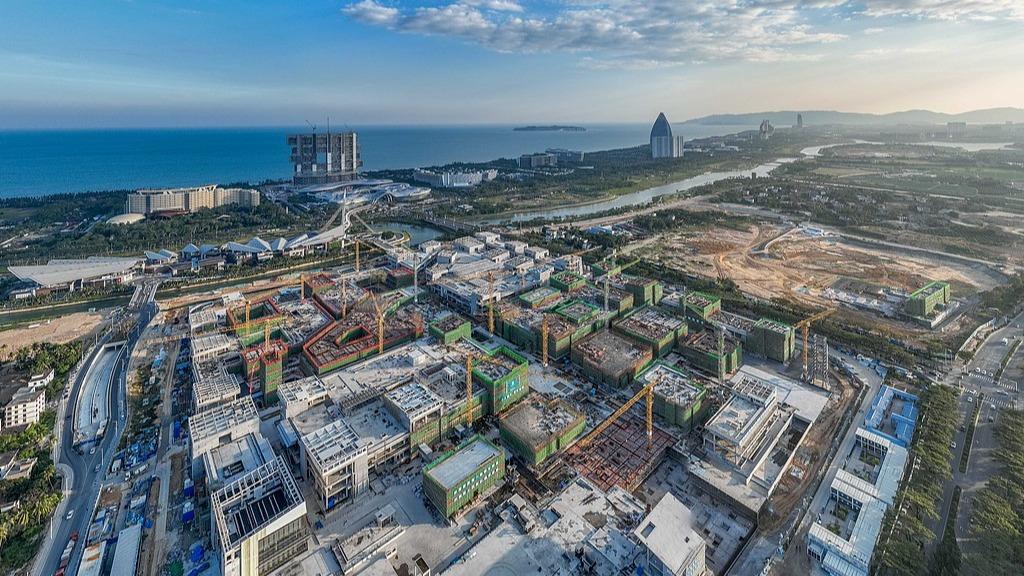
Image Source: CCTV
Author
Rahul Karan Reddy
Rahul Karan Reddy is Senior Research Associate at Organisation for Research on China and Asia (ORCA). He works on domestic Chinese politics and trade, producing data-driven research in the form of reports, dashboards and digital media. He is the author of ‘Islands on the Rocks’, a monograph on the Senkaku/Diaoyu island dispute between China and Japan. He is the creator of the India-China Trade dashboard, the Chinese Provincial Development Indicators dashboard and co-lead for the project ‘Episodes of India-China Exchanges: Modern Bridges and Resonant Connections’. He is co-convenor of ORCA’s annual conference, the Global Conference on New Sinology (GCNS) and co-editor of ORCA’s daily newsletter, Conversations in Chinese Media (CiCM). He was previously a Research Analyst at the Chennai Center for China Studies (C3S), working on China’s foreign policy and domestic politics. His work has been published in The Diplomat, 9 Dash Line, East Asia Forum, ISDP & Tokyo Review, among others. He is also the Director of ORCA Consultancy.