
The escalation of tensions between Afghanistan and Pakistan in 2026 has created a complex strategic challenge for China. A series of cross-border military actions and retaliatory strikes along the disputed Durand Line triggered the conflict on 26th February 2026. Pakistan launched airstrikes targeting “terrorist sites” in Afghanistan’s border provinces, particularly in Nangarhar and Paktia. Islamabad justified the strikes by alleging that Kabul had failed to prevent anti-Pakistan militant groups, especially the Tehrik-i-Taliban Pakistan (TTP), from operating from Afghan territory. Pakistan’s Defense Minister Khawaja Asif, described the situation as an “open war,” signaling a breakdown in bilateral relations. The Taliban-led Afghan government rejected these allegations and responded with retaliatory attacks against Pakistani military positions along the border. Fraying relations between Kabul and Islamabad have now culminated in open cross-border hostilities, significant casualties and the displacement of thousands of civilians.
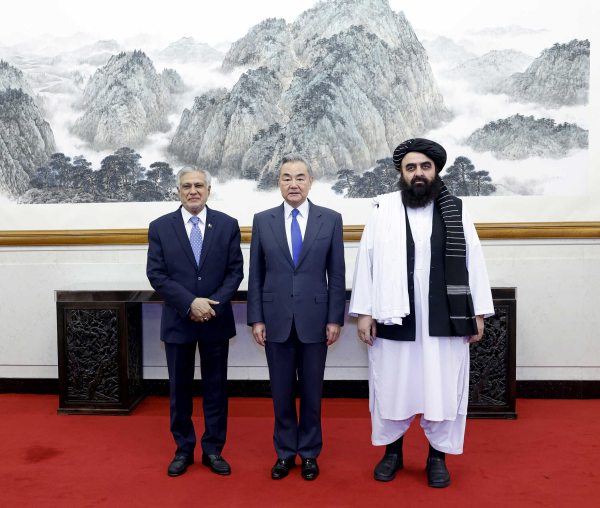
This escalation is particularly significant given China’s prior diplomatic efforts to stabilize relations between the two countries. In 2025, Beijing facilitated a China-Pakistan-Afghanistan trilateral dialogue aimed at “development cooperation, economic integration, extending connectivity and combating transnational terrorist activities.” However, the outbreak of open conflict represents a setback for these efforts. It highlights the limits of China’s leverage and how its economic incentives have failed to prevent confrontation between two of its key regional allies.
Pakistan has long been one of China’s closest strategic partners, with bilateral relations often described as “iron-clad” and “all-weather.” At the same time, Afghanistan has become an increasingly important component of Beijing’s regional diplomacy. Following the withdrawal of US forces from Afghanistan, China expanded its diplomatic engagement with Kabul to help stabilize the country and address the emerging security vacuum. Beijing has also maintained working relations with the Taliban authorities, providing humanitarian assistance and diplomatic engagement to protect regional stability and its strategic interests. In this context, China intensified its neutral diplomatic engagement and directly called for a ceasefire in the Afghanistan-Pakistan conflict. The Chinese foreign ministry assumed a mediatory role and warned both states that continued hostilities would threaten “regional peace and stability.”
Both Pakistan and Afghanistan responded cautiously but positively to China’s mediation efforts, reflecting Beijing’s ability to maintain working relations with both governments despite rising tensions. During a phone call with Chinese Foreign Minister Wang Yi, Pakistan’s Deputy Prime Minister and Foreign Minister Mohammad Ishaq Dar expressed appreciation for Beijing’s efforts to mediate and reduce tensions between Pakistan and Afghanistan. He also reaffirmed Pakistan’s commitment to its strategic partnership with China, stressing that Islamabad “attaches great importance to and will make every effort to ensure the safety of Chinese institutions and personnel” operating in the country. Afghanistan’s response was more measured but remained broadly receptive to China’s involvement. In talks with China’s ambassador to Kabul, Zhao Xing, Afghanistan’s acting foreign minister Amir Khan Muttaqi stressed the importance of respecting Afghanistan’s sovereignty and warned that violations could negatively affect regional stability and bilateral relations. While the Taliban did not explicitly endorse China’s mediation in strong terms, their statements did not reject Beijing’s involvement either.
China’s Economic and Security Stakes in the Conflict
Rising instability between Kabul and Islamabad threatens regional security and creates a strategic dilemma for China. Beijing must balance its close partnership with Pakistan with its engagement with Afghanistan while safeguarding key investments such as the China-Pakistan Economic Corridor (CPEC). The CPEC, a flagship component of the Belt and Road Initiative (BRI), represents one of Beijing’s largest infrastructure and connectivity projects. The corridor links Xinjiang to the Gwadar Port through a network of highways, railways, and energy projects across Pakistan.
Escalating tensions between Afghanistan and Pakistan threaten the CPEC in both countries. On the Pakistani side, terrorism in provinces such as Balochistan and Khyber Pakhtunkhwa has already slowed progress on several infrastructure and energy projects. As cross-border tensions intensify, already delayed project timelines risk being pushed back further. At the same time, deteriorating Afghanistan-Pakistan relations have jeopardized China’s plan to extend CPEC into Afghanistan. Through trilateral diplomacy with Kabul and Islamabad, including meetings led by Chinese Foreign Minister Wang Yi, Beijing has promoted extending CPEC connectivity into Afghan territory. Apart from this, China had also negotiated with Taliban authorities as soon as they came to power in 2021 over mining and resource-extraction projects. Beijing had also initiated processes to revive the long-delayed Mes Aynak copper mine, with construction starting again in 2025 after nearly two decades of setbacks. The project has already seen investments of over $430 million with no returns due to political instability. Renewed conflict between Afghanistan and Pakistan thus worsens Beijing’s financial risks. All these considerations make the maintenance of peace and stability in the region a key priority for China.
China’s Counterterrorism Narrative and Regional Security Considerations
China’s concerns in the region are particularly focused on transnational militant organizations such as the Islamic State Khorasan Province (ISKP) and the East Turkistan Islamic Movement (ETIM). For Beijing, prolonged instability could allow these groups to expand their operations and pose a greater threat to China’s security interests. Many of the investments connected to the CPEC are located in regions already affected by insurgency and militant violence. Groups such as the Balochistan Liberation Army and its affiliate, the Majid Brigade, have repeatedly targeted Chinese personnel and infrastructure linked to these projects. Escalating instability in Afghanistan and Pakistan, therefore, risks intensifying existing security challenges and threatening Chinese investments. These concerns reinforce China’s long-standing objective of combating what it describes as the “three forces of terrorism, separatism, and extremism in Xinjiang.” It also informs Beijing’s view that maintaining continued engagement with the Taliban authorities is necessary to ensure that unstable Afghan territory does not become a host for separatist elements.
The Afghanistan-Pakistan crisis places China in a difficult position. Aligning too closely with Pakistan risks undermining its relationship with Kabul, but distancing itself from Islamabad would weaken one of its most important strategic partnerships in the region. Beijing has therefore sought to frame the issue around shared concerns such as counterterrorism and regional stability, rather than aligning itself too closely with either side.
Through multilateral platforms such as the Shanghai Cooperation Organization (SCO), of which both China and Pakistan are members and Afghanistan an observer, Beijing has encouraged greater coordination with Kabul on counterterrorism, border security, and intelligence sharing. China has so far framed instability in Afghanistan as a broader regional challenge requiring collective action instead of simply framing it as a bilateral challenge. It has therefore urged SCO members and neighboring Central Asian states to increase engagement with Afghanistan on issues of security and development.
Similarly, Beijing has also leveraged its position in the United Nations (UN) to put forth its security considerations for the region. On 4th February 2026, China’s Deputy Permanent Representative to the UN, Sun Lei, addressed the UN Security Council (UNSC) on the issue of counterterrorism. In his remarks, he emphasized the need for international cooperation against terrorism and called on countries to adopt a “zero tolerance” approach toward extremist organizations. Sun Lei also specifically highlighted the continued threat posed by terrorist groups operating in and around Afghanistan, including the Islamic State and the ETIM. He urged the Afghan interim authorities to take “concrete and effective measures” to ensure that Afghan territory does not once again become a haven for terrorist networks.
China has also emphasized the importance of multilateral cooperation on counterterrorism through forums such as the BRICS. As China is expected to assume the BRICS presidency in 2027, Beijing may further advance discussions on advancing stability in the region. Chinese officials have already highlighted counterterrorism as a key area of cooperation within BRICS. During the 14th Meeting of BRICS National Security Advisers, Chinese Foreign Minister Wang Yi emphasized that terrorism remains a “common enemy of humanity” and called for stronger coordination among BRICS countries to combat all forms of terrorism and address emerging security risks. Building on these statements, China may use its future BRICS presidency to bring greater attention to regional instability in South and Central Asia.
In conclusion, the Afghanistan-Pakistan crisis has placed China into a delicate position, forcing it to balance its close partnership with Pakistan against its growing engagements in Afghanistan. China has strong interests in ensuring peace and stability in the Afghanistan-Pakistan region, including protecting its investments in CPEC, safeguarding Chinese personnel, and limiting the spread of militant groups such as ETIM and ISKP. In the face of these challenges, Beijing is responding by maintaining diplomatic channels and engaging in multilateral forums, including the UN, SCO and BRICS. These diplomatic decisions also allow Beijing to reinforce its image as a proactive stakeholder in international counterterrorism cooperation and a key security provider in the region.
Image Credits: MFA, China
Author
Chitra Nair
Chitra Nair is a postgraduate in Chinese Studies from SOAS University of London, holding a bachelor’s degree in International Relations with a minor in Environmental Studies from FLAME University, India. Her research explores contemporary Chinese politics, digital activism, political expression and censorship. She is especially interested in how the state and citizens negotiate power and legitimacy, questions which she seeks to explore through a political sociology lens. She previously interned at the Institute of Chinese Studies, New Delhi, where she published work on media censorship and the queer community in China. Her dissertation, Digital Panopticon : Activism and State Surveillance in China, examines digital activism and censorship in China through three key case studies.