
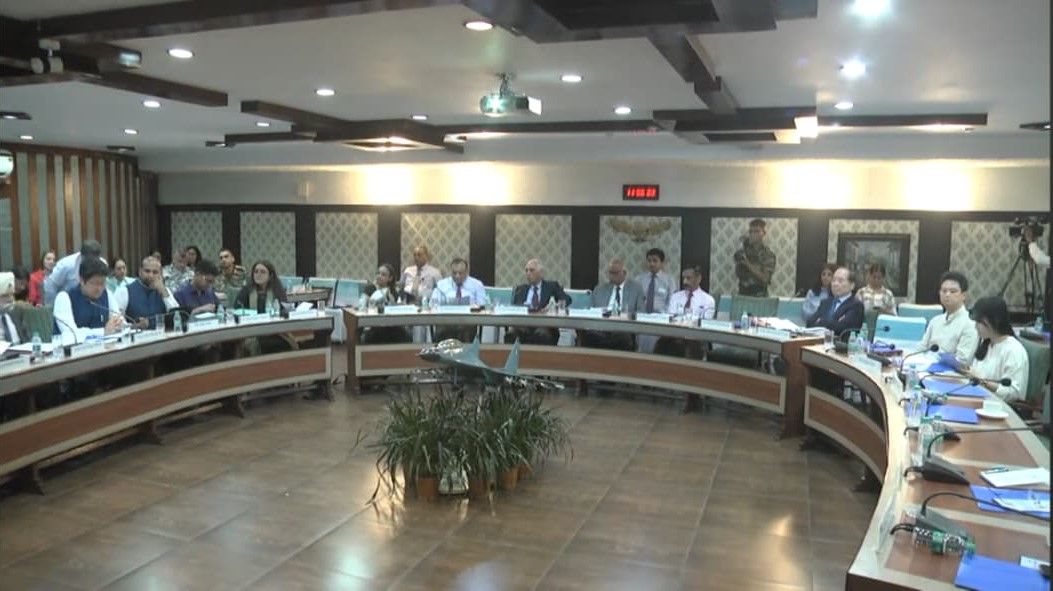
ORCA's Director Ms. Eerishika Pankaj was invited to participate as a panelist at the CAPS–ISDP Joint International Seminar on “India and South Korea in the Age of the Indo-Pacific: Why Minilateralism Matters?” organised by the Centre for Air Power Studies (CAPS) in collaboration with the Stockholm Centre for South Asian and Indo-Pacific Affairs (SCSA-IPA) of the Institute for Security and Development Policy (ISDP), Sweden, on 25 August 2023 at the Air Force Auditorium, Subroto Park, New Delhi. The seminar was held in a landmark year marking the 50th anniversary of India–South Korea diplomatic relations. It brought together senior policymakers, diplomats, military leadership, and academics to deliberate on the evolving strategic convergence between India and South Korea within the Indo-Pacific, with particular emphasis on minilateral frameworks, supply chain resilience, and regional security dynamics.

The discussions highlighted the growing importance of the Indo-Pacific as a central arena of global economic and geopolitical activity, and the increasing relevance of minilateralism in addressing shared challenges such as supply chain disruptions, technological competition, and regional security uncertainties. Participants underscored the need for deeper India–ROK cooperation in trade diversification, defence collaboration, and critical and emerging technologies, while also emphasizing the role of middle powers in strengthening a stable, rules-based regional order.

Ms. Pankaj spoke on “Quad Plus and Korea Inc. in the Future of Supply Chain Diversification” during Session II on “Minilateralism and the New Supply Chain Connect: India & South Korea.” She highlighted that Korea Inc., including conglomerates such as Samsung, Hyundai, and LG across shipbuilding, automobiles, and finance, reflects South Korea’s strong position in global supply chains. She noted that the ROK could play a significant role in supporting Quad members, particularly India, in areas such as smartphones, AI, and quantum science, while India could provide access to large-scale markets. She further emphasized the importance of strengthening technological collaboration, facilitating technology transfer, and addressing shared challenges in climate, cyber, and maritime domains, arguing that deeper cooperation would enhance competitiveness and resilience vis-à-vis China through stronger research capacity and reliability-driven partnerships.
