
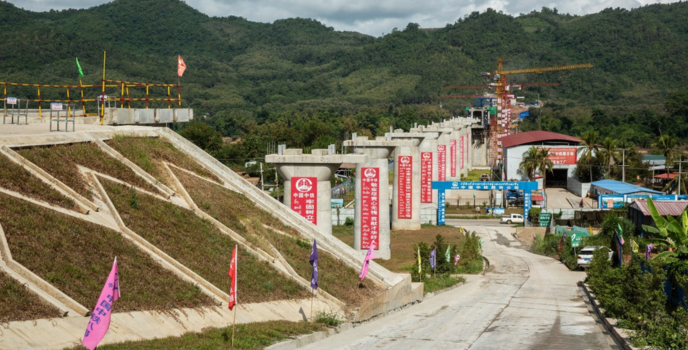
As the Belt and Road Initiative (BRI) enters its second decade, Beijing is no longer selling scale, speed, or spectacle. Instead, Chinese President Xi Jinping has repeatedly emphasized “high-quality cooperation,” stressing strategic confidence, focus, and responsible action. This language reframes the BRI not as an initiative in retreat, but as one entering a more disciplined and sustainable phase.
Over the past years, megaprojects under BRI in several countries, once hailed as symbols of China’s rise, have faced mounting scrutiny over debt distress, environmental damage, and political backlash, with projects stalled or cancelled midstream. Beijing’s response, however, has not been retreat but recalibration. Rather than shrinking, the BRI has entered a second decade that is structurally different - quieter, more negotiated, and more politically adaptive.
Why Southeast Asia Became a Stress-Test for BRI 2.0
Southeast Asia provides a particularly revealing case study for the evolution of the BRI because it is where the structural limits of its early phase were most clearly exposed. Although governments across the region actively sought infrastructure investment and initially welcomed BRI financing, early projects triggered anxieties not only about debt sustainability, but increasingly about sovereignty and control over strategic assets. For instance, Malaysia’s East Coast Rail Link, which was financed largely through loans from the China Exim Bank and constructed by China Communications Construction Company (CCCC), was explicitly viewed as out of Malaysia’s financial capacity, weakly aligned with domestic economic demand, and emblematic of debt dependence and elite collusion rather than genuine development.
Moreover, Southeast Asia’s growing centrality to global economic growth has also made it one of the most contested regions for foreign direct investment (FDI). Rapid population growth, urbanisation, and large untapped resources have drawn sustained investment interest from the United States (US), the European Union, United Kingdom (UK), Japan, and South Korea. Recent investment patterns underscore this geoeconomic contestation. According to the 2025 ASEAN Investment Report, UK’s FDI nearly quadrupled from USD 5 billion in 2023 to USD 19 Billion in 2024, while Japan’s investment increased by 38 per cent, from USD 13 billion to USD 18 billion. Meanwhile, the US remained the largest investor in the region. Together, these trends reflect the intensifying geoeconomic competition among global and regional powers seeking to consolidate their presence in the region.
Additionally, the strategic importance of Southeast Asian countries within China’s zhoubian waijio (周边外交) –peripheral diplomacy– has incentivised Beijing to recalibrate its BRI projects to ‘small but beautiful’ (小而美). This shift signals a departure from capital intensive, hard infrastructure-centric projects to small footprint but high impact initiatives that are better suited to domestic political sensitivities in host countries while remaining strategically relevant.
From Scale to Fit: What Actually Changed
The first decade of the BRI was shaped by the politics of visibility. Large-scale ports, railways, highways and power plants functioned as signals of China’s emergence as an economic power. In BRI 2.0, however, scale has been shifted to strategic fit. Rather than prioritising headline infrastructure, China has increasingly focused on projects such as industrial parks, logistics platforms, supply-chain infrastructure, renewable energy and data infrastructure. These sectors embed Chinese capital and firms within host-country development strategies while leveraging China’s domestic technological and industrial strengths. This is evident in the role of Chinese private technology firms like Huawei and ZTE that have supported Thailand’s 5G network expansion and data centre infrastructure, thereby integrating Chinese digital standards into Bangkok’s emerging digital economy. In this model, influence is no longer derived from the magnitude of construction, but by how functionally indispensable those investments become to host countries' domestic economic trajectories.
Equally important has been the recalibration of project pacing. BRI 1.0 was characterised by rapid disbursement, state-led financing and a high tolerance for political and fiscal risk. In contrast, BRI 2.0 normalises phased financing, extended timelines and iterative renegotiation. Myanmar’s Kyaukpyu deep-sea port illustrates this shift. Initially conceived as a large, debt-intensive project, the port was significantly downsized after 2018, with development restructured into incremental phases to mitigate Myanmar’s financial exposure and political sensitivities. Rather than insisting on the original design or withdrawing under pressure from the host countries, China accepted a slower, more modular approach, signalling a tactical adjustment. Moreover, China has shifted its approach to political ownership. BRI 1.0 relied heavily on state-to-state dealmaking, dominated by Chinese policy banks and state-owned enterprises engaging primarily with central government and state-owned entities in the host countries. While this approach enabled rapid projects rolls out it also left projects politically exposed when domestic conditions changed. In BRI 2.0, China has increasingly accepted joint implementation with local firms, deeper engagement with provincial and municipal authorities, and greater sensitivity to subnational development priorities. For instance, Malaysia’s East Coast Rail Link was renegotiated and redesigned to dilute Chinese construction dominance and expand the role of Malaysian contractors. While Chinese firms, particularly CCCC, remained essential to execution, the project’s viability came to depend less on elite consensus in Putrajaya and more on its integration into Malaysia’s domestic development ecosystem. In Southeast Asia’s fragmented political environments, this shift of embedding projects within the local governance has proven more resilient.
Perhaps the most consequential shift in BRI 2.0 lies in how Beijing now conceptualises connectivity. While China continues to invest on trade facilitation infrastructure like ports, and rail corridors, that has reinforced its expanding trade surplus with the region, physical infrastructure is no longer sufficient as a strategy of influence. Beijing has increasingly prioritised technology integration, supply-chain embedding, industrial upgrading, and emerging sectors such as digital infrastructure and energy transition. The emphasis has moved from facilitating movement to shaping production and value capture, often framed through the language of sustainability and high-quality development. In Indonesia, Chinese investment now aligns with Jakarta’s push for downstream processing and industrial sovereignty, particularly in nickel refining and electric vehicle supply chains. In Vietnam, integration occurs through complex manufacturing linkages and cross-border supply chains, often without overt BRI branding. In both cases, connectivity is no longer measured in kilometres of rail lines or ports, but by the depth of integration of Chinese SOEs and private firms into domestic economic structures and long-term development trajectories.
Narrative as Strategy
Alongside material adjustments, BRI 2.0 reflects a deliberate recalibration of narrative and framing. As China’s overseas footprint has expanded and attracted greater political scrutiny, narrative has become a tool for managing risk, resistance, and misalignment. The shift in framing was seen at the Third Belt and Road Forum for International Cooperation (BRF III) in 2023, where Xi Jinping highlighted the principles of “planning together, building together, and benefiting together”, alongside commitments to open, green, and clean cooperation. This political language parallels China’s foreign policy notions, particularly the ‘Community for Shared Future of Mankind’ (人类命运共同体), which stresses mutual development, inclusivity, and shared responsibility. Framing the BRI within this discourse marks a clear departure from the triumphalist rhetoric of the initiative’s early years. By emphasising co-creation over projection, Beijing signalled that influence works best when it aligns with local development priorities rather than top-down imposition.
This shift is particularly evident when China launched the Beijing Initiative on Belt and Road International Digital Economy Cooperation at BRF III. By linking digital economy cooperation and anchoring it in principles such as interconnection, openness and mutual benefit, China is attempting to shift the BRI from a model of project export to one of agenda co-construction - a framing that also aligns with its Global Data Security Initiative (GDSI). In Southeast Asia, digital transformation is both a national priority and politically sensitive; this inclusive framing lowers resistance without triggering the anxieties that often accompany large, high-profile projects.
Moreover, President Xi described BRI cooperation as transcending differences in civilisation, culture, political systems and stages of development. In Southeast Asia, where diversity is a lived political reality, this framing matters. It lowers the ideological temperature and allows engagement with China to be defended as pragmatic development rather than geopolitical alignment. Whether or not practice always matches rhetoric, the shift itself reflects that Beijing is adapting.
Taken together, the evolution of BRI in Southeast Asia is a result of recalibration under structural and political constraints. BRI 2.0 is less visible, more negotiated, and more deeply embedded in domestic economic priorities. By trading speed and visibility for sustainability and compatibility, China has made the initiative more resilient to political disruption. This does not mean Southeast Asia has been subsumed, nor that local agency has disappeared. Governments across the region continue to renegotiate, delay and selectively accept Chinese projects, often leveraging competition among external partners to maximise their own manoeuvring capability.
For Beijing, this evolution reflects a pragmatic recognition of limits. Whether this strategy ultimately succeeds will depend not only on China’s adaptability but also on how Southeast Asian states continue to navigate economic opportunity alongside strategic autonomy. What is clear, however, is that BRI is no longer best understood as a single grand project or even a coherent brand. It has become a flexible framework through which China experiments with new modes of influence under constraint.
Image Credit: Bloomberg
Author
Ophelia Yumlembam
Ophelia Yumlembam is a Research Associate at the Organisation for Research on China and Asia (ORCA). Before joining ORCA, she worked at the Dept. Of Political Science, University of Delhi, and interned at the Council for Strategic and Defence Research in New Delhi. She graduated with an M.A. in Political Science from the DU in 2023. Ophelia focuses on security and strategic-related developments in Myanmar, India's Act East Policy, India-Myanmar relations, and drugs and arms trafficking in India’s North Eastern Region. Her writings have been featured in the Diplomat, South Asian Voices (Stimson Centre), 9dashline, Observer Research Foundation, among other platforms.