
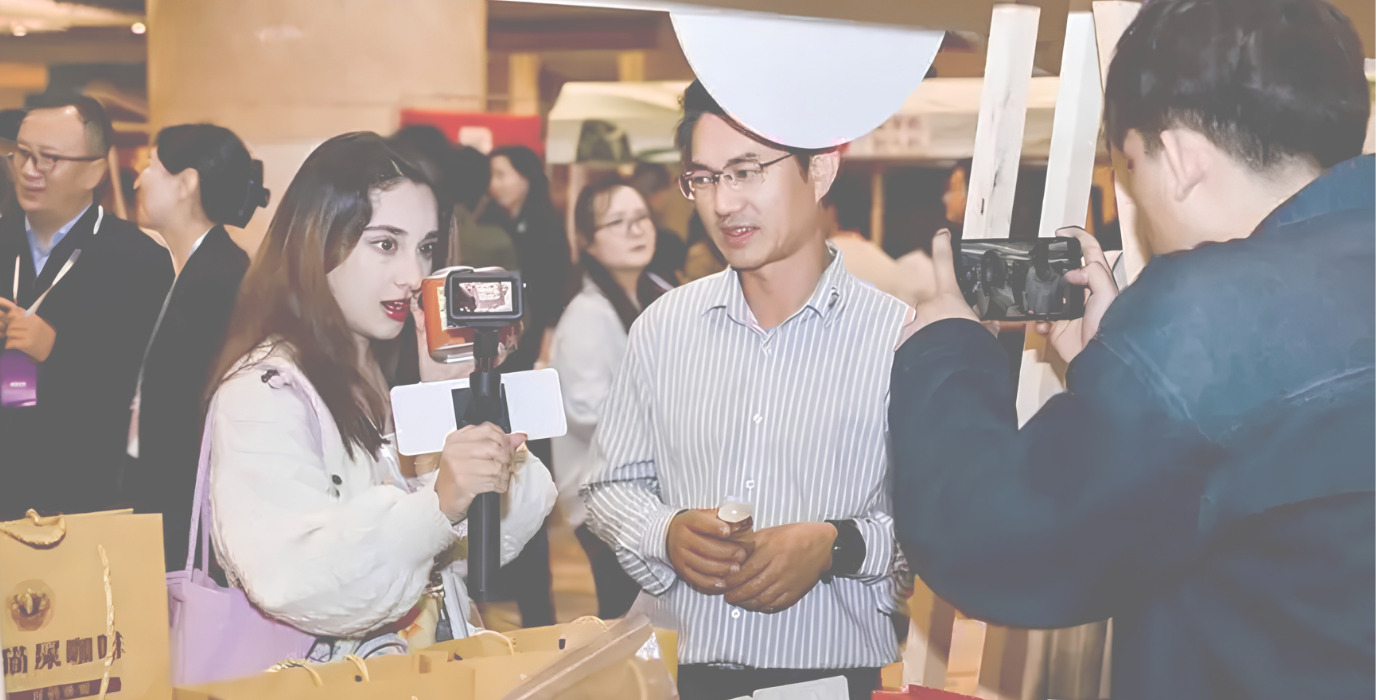
Over the last few years, particularly since the COVID-19 pandemic, Beijing has placed greater emphasis on shaping how China is perceived internationally. While efforts to influence China’s image abroad are not new, what is more significant today, however, is who is being brought into the process of telling China’s story. Foreign social media creators, travel vloggers and influencers are becoming a more visible part of Beijing’s efforts to shape perceptions of China abroad. Through sponsored trips, curated access and other forms of engagement, creators with hundreds of thousands of followers are producing content that can feed into narratives about China’s development, modernity and everyday life. The appeal of foreign creators lies in their perceived authenticity of personal experience, as their content and videos about China can carry a different kind of credibility that official messaging often struggles to achieve.
More significant still is how Beijing’s search for these voices is taking on a distinctly regional dimension. Its engagement with creators from South and Southeast Asia points to a greater emphasis on cultivating voices that are culturally and geographically closer to the audiences China seeks to reach. For audiences that already have extensive economic, cultural and social interactions with China, these voices can contribute to making China more familiar and, over time, more normalised within regional digital spaces. The importance of this shift therefore extends beyond individual influencer campaigns; it points to a potentially overarching strategy in how Beijing seeks to build influence abroad. Against this backdrop, why should South Asia, particularly India, pay closer attention to Beijing’s emerging influencer strategy, and what does it reveal about how China’s soft-power strategy may be heading in the near future?
Borrowing Mouths to Build Familiar Narratives
Official claims about China’s technological advancement, economy, public safety or social development carry the identifiable markers of state messaging, whereas similar observations from foreign creators can appear more independent and grounded in personal experience. This gives foreign creators an important intermediary role, allowing narratives broadly consistent with China’s preferred international image to circulate without always carrying the institutional markers of official communication. Chinese authorities themselves have recognised this advantage, with the Foreign Ministry describing foreign influencers’ livestreams as presenting China “as it is” and noting that overseas audiences were discovering a country different from what they had previously heard about.
This credibility is strengthened by what can be understood as curated authenticity, where the persuasive force of the content comes from the creator’s first-person experience, while the environment in which that experience occurs may still be structured. Research on foreign influencers travelling through Xinjiang, for instance, found evidence that some locations appearing in their videos had been selected by state entities, while their subsequent content was extensively repackaged and amplified by Chinese state-linked accounts. Between January 2020 and August 2021 alone, ASPI identified at least 546 posts and articles from 156 state-controlled accounts amplifying Xinjiang-related material from 13 influencer accounts. This amplification gains greater significance when considered alongside the narratives that the state media chooses to foreground.
One recurring theme is the idea of foreign creators discovering the “real China” through first-hand experience, often in contrast to their previous perceptions of the country. For example, Pakistani vlogger Mahzaib Abbasi, with more than 213,000 subscribers on YouTube, has been presented as showing South Asian audiences an everyday China beyond existing stereotypes, while Indian creators have similarly been highlighted for encountering a country different from what they had expected. In 2026, China Daily profiled Indian creator Anayat Ali following an organised media tour through Henan and subsequently placed his experiences within a forum on “Telling Stories Well”. The foreign creator consequently becomes a form of third-party validation, with personal experience lending credibility to the proposition that negative perceptions of China result partly from distance or misunderstanding.
The same mechanism can also operate domestically. A Global Times article featuring Nepali influencer Garima Ghimire, for example, described surveillance cameras, security checks and accessible policing as contributing to their sense of safety in China. Her opinions were subsequently co-opted by state media within the broader narrative of a “safe and secure China”, reframing practices associated internationally with surveillance and state control as good policing. This framing also appears designed to resonate domestically, where official discourse positions social stability as a foundation of national strength. In the context of China’s performance-based legitimacy, positive foreign accounts of safety and social stability can therefore reinforce the strengths of the Chinese model that are visible beyond its own borders.
Telling China’s Story to the Neighbourhood
China’s cultivation of regional intermediaries is not entirely new, but the range of actors it engages appears to be widening. The Communist Party of China (CPC)’s International Liaison Department (ILD) has maintained party-to-party relationships across South Asia, while its regional engagement has brought political representatives together with think tanks and media actors. In 2022, for instance, an ILD-led conference brought together more than 100 representatives from over 40 political parties and social organisations across South and Southeast Asia, explicitly emphasising the role of these networks in strengthening the “public opinion foundation” for Belt and Road cooperation. In the same vein, Beijing’s new influence strategy brings intermediaries capable of reaching mass regional audiences beyond traditional political and intellectual circles. What is changing is the social reach of these networks, as established engagement is complemented by digital creators who can influence audiences sceptical of the credibility of traditional Chinese state media.
The significance of Beijing’s growing engagement with South Asian creators also lies in the regional infrastructure emerging around these interactions. Since late 2025, China has begun to move from one-off creator engagements towards more sustained forms of institutional interaction. In December 2025, for instance, five Bangladeshi influencers were taken on a week-long programme in Yunnan organised by Yunnan Media Group, visiting universities, hospitals, agricultural bases, technology facilities and cultural sites. Chinese organisers referred to them as “young opinion leaders” and indicated plans to bring more Bangladeshi creators into a broader South and Southeast Asia Influencer Alliance. In June 2026, the Publicity Department of the CPC Yunnan Provincial Committee hosted the first South and Southeast Asia Online Content Creators Conference, bringing regional creators together and making them participate in multiple cultural activities. Beyond one-off sponsored visits, these initiatives create recurring platforms through which Chinese institutions can maintain relationships with creators across the region.
Moreover, Beijing’s effort to cultivate closer relationships with South Asian creators is strategically significant because regional proximity can confer a form of credibility that Western creators may not easily replicate. A Pakistani creator, for instance, can draw comparisons between Chinese and Pakistani infrastructure; an Indian creator can frame Chinese public transport, urban development or consumer technology against experiences familiar to Indian audiences. Such comparisons will be seen as telling their own personal experience and can appear more authentic and relatable to the regional audiences. But the problem is that even when the content is not explicitly political, it can still align with and reinforce the narratives that the CPC wants international audiences to associate with China.
This regional focus is particularly significant in India, where perceptions of China have been filtered through an often critical domestic media discourse dominated by border tensions and strategic competition. As news consumption shifts towards social and video platforms, however, the sources shaping these perceptions are also changing, with 58 percent of respondents in a 2026 survey reporting that they use YouTube for news, compared with 44 percent who use television. Regional creators thus introduce varied narratives about China into an information environment now shaped by personalities and platforms. A single video may have little impact on audience attitudes, but a steady stream of relatable, locally mediated content can gradually influence the reference points through which audiences in the new digital age interpret and evaluate China.
Towards a South Asian Response
The challenge for South Asian countries is not to treat every positive portrayal of China as propaganda or to assume that every creator travelling to China is participating in a coordinated influence operation. Many creators may simply be responding to opportunities to travel, produce content and engage with a country that is increasing their global digital footprint. However, more emphasis needs to be given on the architecture behind such sponsored trips – who facilitates the visits, who funds them, which institutions are involved, what relationships are built afterwards, and how the resulting content is amplified.
For India, understanding this shift requires looking beyond individual videos or influencers to the wider information environment in which they operate. The more relevant questions concern whether repeated exposure generates greater familiarity or trust, which audiences are most receptive to these narratives, and whether perceptions change when viewers know that a creator’s trip was facilitated by Chinese institutions. The effects may instead be more subtle, making China’s technological progress and governance mechanisms familiar reference points against which audiences assess their own countries. Developing the capacity to track these patterns would allow India to assess the actual outcome of China’s creator diplomacy without either overstating its influence or overlooking the evolving avenues of Chinese soft power.
Image Credit: China Internet Information Center
Author
Ophelia Yumlembam
Ophelia Yumlembam is a Research Associate at the Organisation for Research on China and Asia (ORCA). Before joining ORCA, she worked at the Dept. Of Political Science, University of Delhi, and interned at the Council for Strategic and Defence Research in New Delhi. She graduated with an M.A. in Political Science from the DU in 2023. Ophelia focuses on security and strategic-related developments in Myanmar, India's Act East Policy, India-Myanmar relations, and drugs and arms trafficking in India’s North Eastern Region. Her writings have been featured in the Diplomat, South Asian Voices (Stimson Centre), 9dashline, Observer Research Foundation, among other platforms.
Chitra Nair
Chitra Nair is a postgraduate in Chinese Studies from SOAS University of London, holding a bachelor’s degree in International Relations with a minor in Environmental Studies from FLAME University, India. Her research explores contemporary Chinese politics, digital activism, political expression and censorship. She is especially interested in how the state and citizens negotiate power and legitimacy, questions which she seeks to explore through a political sociology lens. She previously interned at the Institute of Chinese Studies, New Delhi, where she published work on media censorship and the queer community in China. Her dissertation, Digital Panopticon : Activism and State Surveillance in China, examines digital activism and censorship in China through three key case studies.