
China’s 15th Five-Year Plan (2026-2030) seeks to sustain economic growth by increasing household consumption in an economy long reliant on investment and exports. Rising global uncertainty, particularly amid the tariff war, has added urgency to this shift by exposing risks in heavy reliance on exports, such as reduced access to overseas markets and higher compliance costs for exporters. The recently released third-quarter economic data offer early indications that the pro-consumption policy push is gaining momentum, with payments across various consumption categories rising by 2.6 per cent year-on-year during the period, showing an increase of 0.7 percentage points from the second quarter. However, shifting towards consumption-led growth requires more than incentives. The persistent high household savings, uneven consumption growth across sectors and the relatively modest share of household consumption in GDP point to deeper structural obstacles to boosting domestic demand. The 15th FYP places a particular emphasis on addressing these challenges through a combination of immediate consumption incentives and long-term welfare measures. The question, however, is whether this policy mix can move beyond stimulating short-term spending and create the conditions for a more sustained rebalancing of China’s growth model.
Conditions for a Lasting Consumption Shift
China’s weak consumption is not simply a low demand problem but is also rooted in households’ persistent tendency to save a large share of their income, making them among the highest savers globally. The household surveys of the first half of 2026 indicate that the urban household savings rate is now close to 40 per cent, up from approximately 33 per cent before the pandemic. As households save a larger share of their income, less is available for consumption, weakening domestic demand and limiting its contribution to economic growth. This highlights an underlying paradox in Beijing’s efforts where households are saving more, and the state is pushing for an increase in domestic consumption.
During the first three quarters of 2026, per capita disposable income increased by 4.4 per cent in real terms, whereas real per capita consumption expenditure only grew by 2.7 per cent. The gap indicates that spending is not keeping pace with income growth, raising questions about the factors that continue to constrain household spending. The trajectory of this gap over subsequent quarters will be significant in examining whether rising household incomes are translating into stronger consumption.
In the same period, per capita expenditure on education, culture and recreation rose by 4.6 per cent, whereas spending on household facilities, articles and services grew by 4.7 per cent. Service consumption expenditure remained 47.3 per cent of total household consumption expenditure, showing an increase by 0.5 percentage points from the previous year. However, these categories also overlap with areas explicitly targeted by Beijing in its consumption-expansion policies. For instance, it has prioritised cultural and tourism activities, education and training, along its trade-in and consumer-goods subsidy programmes support purchases of household appliances, home furnishings and digital products. Therefore, the growth in consumer demand in these sectors is more likely to be the effect of state policy incentives than a change in household spending behaviour. The continued strengthening of consumption in sectors beyond those directly targeted by promotional campaigns and policy incentives will help determine whether household demand is becoming more resilient.
However, rising household expenditure, even when sustained across several categories, does not necessarily imply consumption is becoming a more prominent driver of growth relative to investment and net exports. It also requires examining household consumption as a share of GDP and its contribution to economic growth over a longer period. China’s household final consumption expenditure accounted for approximately 40 per cent of GDP in 2024, compared with around 68 per cent in the United States. This gap underscores the extent to which household consumption remains a relatively small component of China’s economic output. Similarly, it remains to be seen whether improvements in pensions, healthcare and other categories in the social security net are implemented at a scale that boosts household economic security and reduces the need for precautionary savings remains to be seen.
These broader indicators can only provide a way to assess whether the foundation for a lasting consumption shift is emerging. Sustaining this shift would require household spending to grow more in line with disposable income, a decrease in precautionary savings, and broader consumption growth beyond subsidised purchases. Over time, a gradual rise in household consumption as a share of GDP would offer stronger evidence of structural rebalancing. While at this point, the current data do not establish that China’s consumption push will produce a durable rebalancing, but they help distinguish early signs of stronger domestic demand in the growth model.
The Dual-Tracked Consumption Push
The 15th Five-Year Plan included a dedicated chapter as “Vigorously Boosting Consumption” (提振居民消费), signalling an effort to place domestic consumption-led growth as a central component of its development strategy. The priority reflects the need to strengthen domestic demand and reduce the economy’s dependence on exports, particularly amid rising global uncertainty and tariff wars that threaten the reliability of external markets. During the first eight months of 2026, the data on retail sales of consumer goods indicate that pro-consumption policies are beginning to yield positive results. However, the extent and sustainability of this growth remain to be assessed.
The policy measures are focused on two timelines. In the short term, consumer-goods trade-in programs and purchase subsidies aim to lower the cost of selected purchases and stimulate immediate spending. The State Council’s July 2026 consumption-expansion plan also seeks to encourage spending on services such as tourism, catering, cultural activities and leisure, taking demand-boosting beyond physical goods to better experiences. In the long run, Beijing seeks to strengthen households’ purchasing capacity through improvements in income and the social security net. The elderly-care plan, healthcare initiatives, pension reforms and education reforms, alongside efforts to raise minimum wages and expand individual income-tax deductions, are all intended to improve household welfare and disposable income. For example, a nationwide elderly-care subsidy provides eligible older people with vouchers worth up to ¥800 per month (about US$114 per month) to offset the cost of home-based, community-based and institutional care services, aiming to reduce the financial burden on families supporting elderly people. By easing financial pressures arising from basic requirements, these measures could encourage households to spend a greater share of their income.
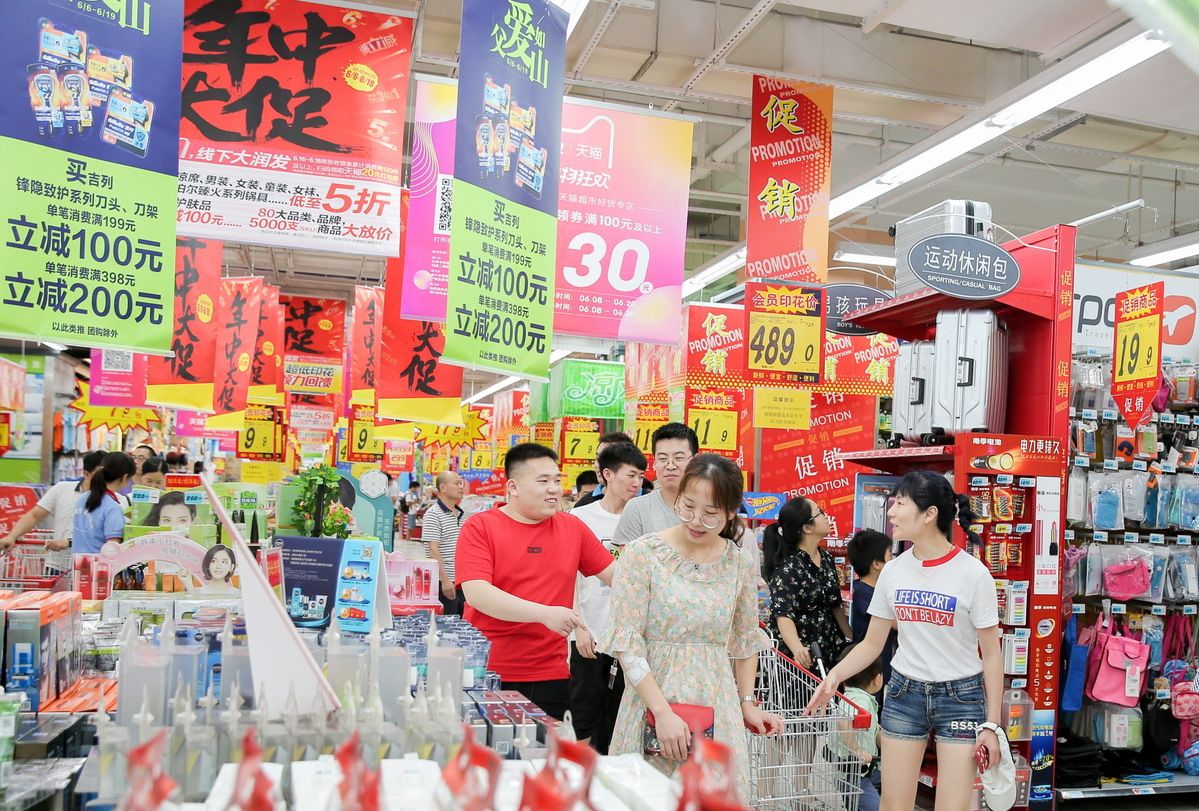
In addition, the recently celebrated Golden Week (黄金周), from October 1 to October 7, also saw increased sales in major business districts, supported by promotional events, trade-in subsidies as well as cultural and sporting activities. However, these indicators are not sufficient to analyse whether consumption is recovering on a broader scale. Subsidised purchases, supported trade-in programs and holiday spending can generate short-term activity without guaranteeing to produce a lasting increase in domestic consumption.
Beijing is deploying both short-term incentives and longer-term welfare measures, but their effectiveness will depend on whether they can alter people’s underlying purchasing capacity and willingness to spend and whether the policies can address the structural conditions that continue to constrain household consumption.
Hence, under the current FYP, China’s consumption push shows a stronger policy commitment to boost domestic demand, but the results so far are only a partial indication of its long-term potential. The income growth and expanding services expenditure suggest positive signals, but the gap between rising incomes and sluggish consumption growth, as well as high household savings, points to constraints that the mere introduction of pro-consumption incentives is unlikely to resolve. Rather, it will depend on whether improvements in household welfare, disposable income and social protection are substantial enough to reduce precautionary saving and support sustained spending. This does not necessarily require the state to abandon its traditional state-directed development model, but it does need a greater emphasis on improving household economic security alongside investment and industrial expansion. Hence, Beijing’s consumption objective will not only be fulfilled by stimulating spending, but also by creating and sustaining the conditions for households to spend more and make consumption a more enduring pillar of China’s economic growth.
Image Credit: China Daily
Author
Arushi Sharma
Arushi Sharma is a Junior Research Associate at Organisation for Research on China and Asia (ORCA). She is a recent postgraduate in East Asian Studies from the University of Delhi and holds a Bachelor's degree in Chinese Language from K.R. Mangalam University. She has previously worked as a Subject Matter Expert in Mandarin Language at Unacademy. Her primary research interests focus on China's domestic politics and international economic statecraft.